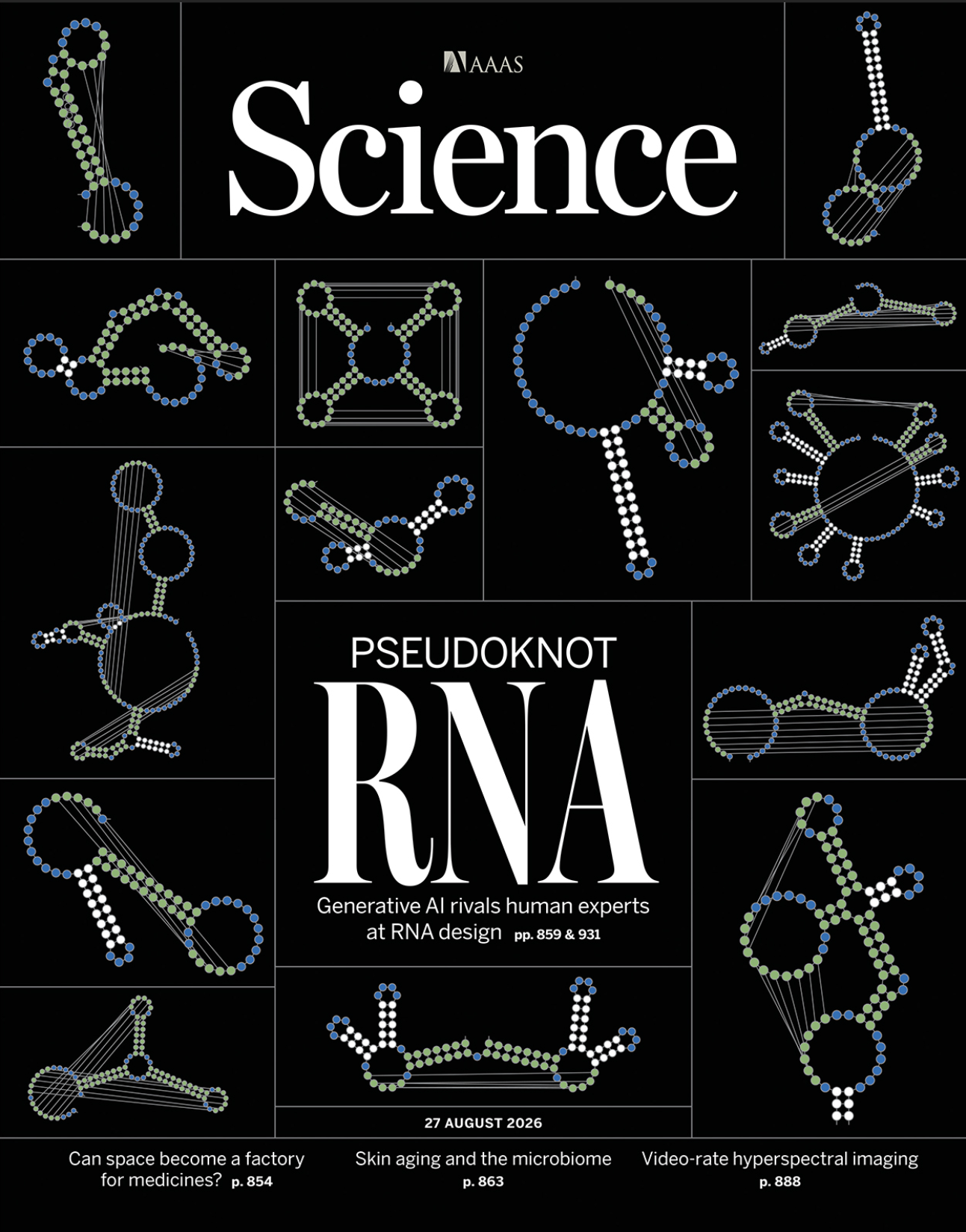
De novo design of RNA pseudoknots with deep learning
Science, August 2026 • Mol9 in the PDB (10ZT)
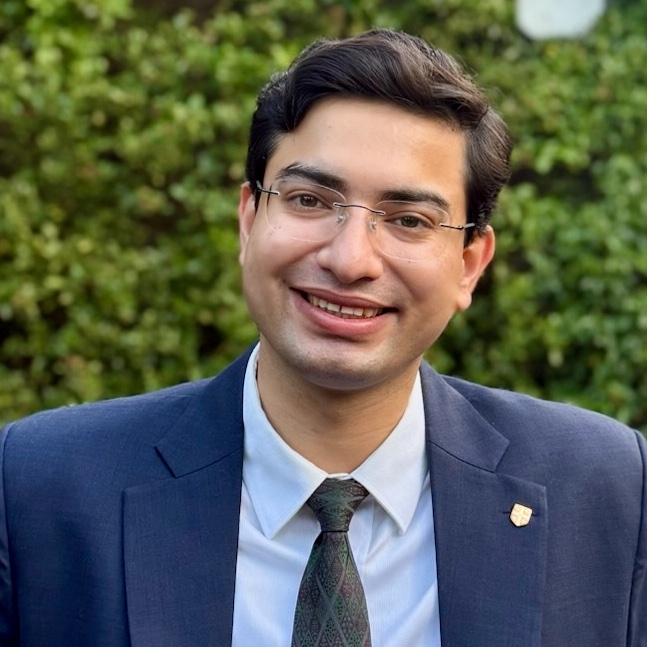
Stanford Data Science Fellow & Postdoctoral Scholar
I'm a Stanford Data Science Fellow and postdoc with Rhiju Das at the Department of Biochemistry. I build lab-in-the-loop AI for RNA biology, pairing deep learning with wet-lab experiments at scale.
I did my PhD in Computer Science at the University of Cambridge with Pietro Liò, on geometric deep learning for molecular design. I built gRNAde, the first 3D generative model for RNA, and validated it experimentally as a visiting researcher in Phil Holliger's group at the MRC LMB. I've also interned at Prescient Design (Genentech) and FAIR Chemistry (Meta AI).
Selected as one of the Rising Stars in Data Science, 2026, jointly organised by UChicago, Harvard, UC San Diego, and Stanford.
De novo design of RNA pseudoknots with deep learning is published on the cover of Science. Cryo-EM structure of gRNAde-designed Mol9 in the PDB: 10ZT.
Attending the 75th Lindau Nobel Laureate Meeting as a Young Scientist.
Started as a Stanford Data Science Fellow in the Das Lab.
Wet-lab validated ribozyme design with gRNAde is on bioRxiv, with the Holliger Lab at MRC LMB.
All-atom Diffusion Transformers accepted at ICML 2025, with FAIR Chemistry at Meta AI.
gRNAde is a Spotlight at ICLR 2025; also co-organised the AI for Nucleic Acids workshop.
Science, August 2026 • Mol9 in the PDB (10ZT)
bioRxiv, December 2025 • Accompanying methods paper (ICLR 2025 Spotlight)
Wet-lab validated generative RNA design, including functional ribozymes and new-to-nature 3D structures.
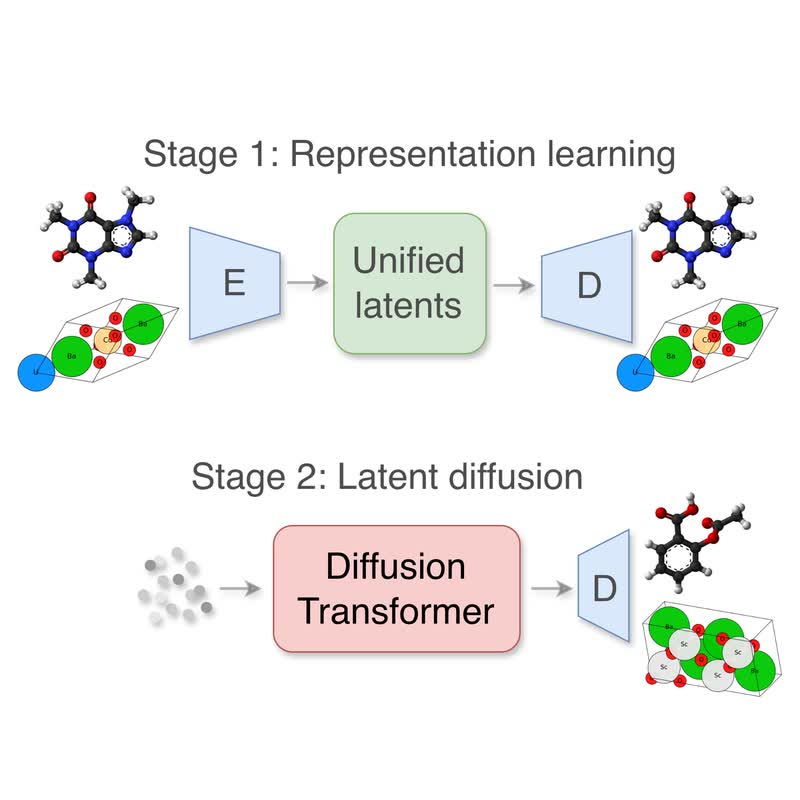
ICML 2025 • ICLR 2025 AI4Mat Workshop Spotlight
First unified generative model for molecules and materials, showing transfer learning across chemical space.
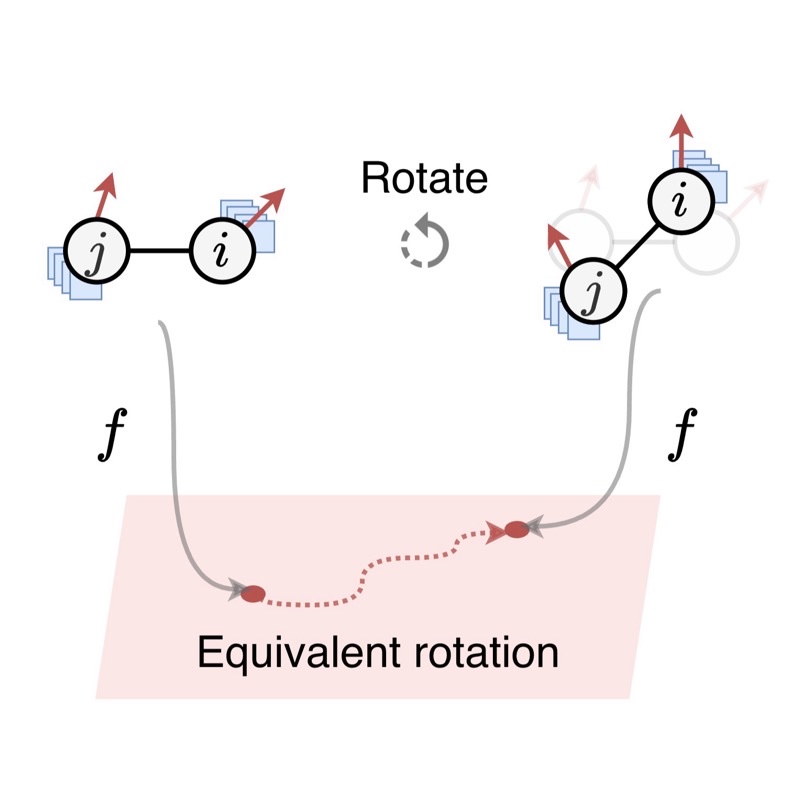
arXiv, December 2023 • Companion theory paper (ICML 2023)
A widely used introduction to GNNs for molecules; part of course material at Stanford, Cambridge, and Oxford.

November 2025 • Molecular Modeling Club
Dynamics, black-box data, and the antedisciplinary frontier of biomolecule design.

June 2025 • Molecular Modeling Club
When to bake symmetry into a model versus just scaling up: a nuanced take for molecular modelling.

September 2020 • The Gradient • 2025 update
How attention can be understood as message passing on a graph. One of the most read articles on The Gradient.
Interested in working together? Email me: chaitjo@stanford.edu
Beckman Center, Department of Biochemistry
Stanford University, School of Medicine
279 Campus Drive, Stanford, CA 94305